Monthly Archives: October 2014

RBA Statement

No change in the cash rate today, as expected.

Here’s the full statement.

Some takeaways:

  • Chinese property a drag (albeit it with strong indication of a changing policy stance, whether it is effectual remains to be seen)
  • Volatility up globally, though still not elevated by any means
  • Mining investment is declining offset by a pick up by ‘other areas’ of private investment (other areas mostly being residential property construction)
  • Labour market data have been all over the place lately, conditions aren’t dire but softness remains (a great share of recent job creation has been centred on property construction)
  • Monetary policy is loose. Overall credit growth is moderate but being driven by housing investors
  • Exchange rate is down, but not far enough given the drop in commodity prices, and has further to fall to lift the moribund tradable sectors
  • Wage growth is more or less nonexistent, and inflation not concerning (appears RBA is happy to ‘look through’ a rise in import prices as the currency falls in value, rightly so in my view)
  • On present indications, the most prudent course is likely to be a period of stability in interest rates.

Nothing to get too excited about either way at this stage.

As I said when I launched this blog and soon thereafter began a series on Australian interest rates:

In a country like Australia, changes to interest rates tend to be quite effective in influencing economic conditions. Lower rates stoke borrowing, asset prices and consumption, giving way to higher rates, and vice versa. Why then are we drifting across a calm blue ocean of low interest rates?

Primarily due to the uneasy schism that has emerged in our economy. On the one hand we have the descent from what has almost certainly been the biggest terms of trade/investment boom in our nation’s history. On the other we have a raging house bubble boom. Which force prevails in this struggle will determine the short- to medium-term direction of interest rates.

For now, the RBA is happy to sit and wait for further indication of which force is gaining the upper hand.

Straya T’day 7/10/2014

RBA day

Well, what a day to return to the world of econ after a long weekend of agreeable company and responsible drinking.

The Treasurer has acknowledged that the terms of trade bust is likely to weigh heavily on the budget in the years ahead, which seems to have spooked bank stocks (Australian banks funding costs are dependent on the health of the public balance sheet). Although I am in agreement on the outlook for commodity prices, it’s worth bearing in mind that the budget in May expected the Australian dollar to remain at .9300 against the USD. The large falls in the AUDUSD during the past couple of months will therefore help to cushion the impact of the prices for key exports (by supporting company tax revenues).

The RBA will chime in shortly with its view on the state of the economy. There’s effectively zero chance of the RBA changing the cash rate today, meaning my dovish forecast will survive another month.

Perhaps the most impactful development in the last couple of weeks has been the RBA’s Damascene conversion to Church of Macroprudential (see here also). Bloomberg picked up the story on the weekend, with RBA Makes Hawks Cry With Turn From Rate Tools: Australia Credit

The article quotes forecasters who’ve pushed out their expectations for rate hikes due to the change in policy from the RBA.

TD Securities and AMP Capital Investors Ltd. joined traders in drawing back from forecasts for early rate increases in response to policy makers’ hardening rhetoric on curbing mortgage lending to housing investors. RBA Governor Glenn Stevens is forecast to keep the benchmark unchanged at a record low tomorrow.

It is indeed true that the RBA’s adoption of macpru tools, if they prove successful in cooling the investor housing feeding frenzy, will reduce the need for higher rates. To recap my well-worn view on Strayan rates: the unfolding terms of trade shock and the decline in mining investment are currently jostling with a robust housing sector, concentrated especially in Sydney and Melbourne, for primary influence on the short-term direction of interest rates. So if the RBA can find ways to take the froth out of the housing market without raising rates, this favours interest rate doves.

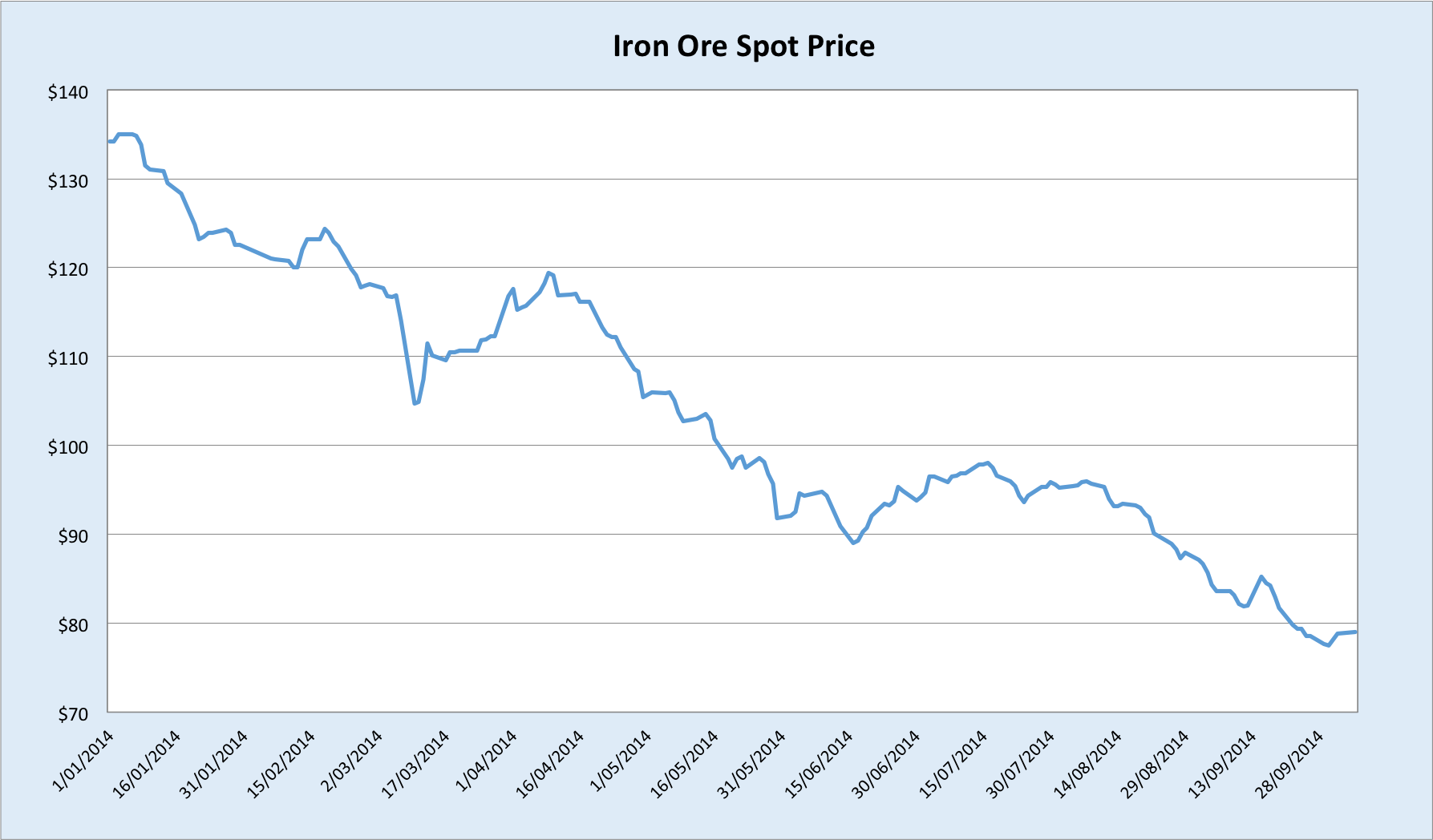
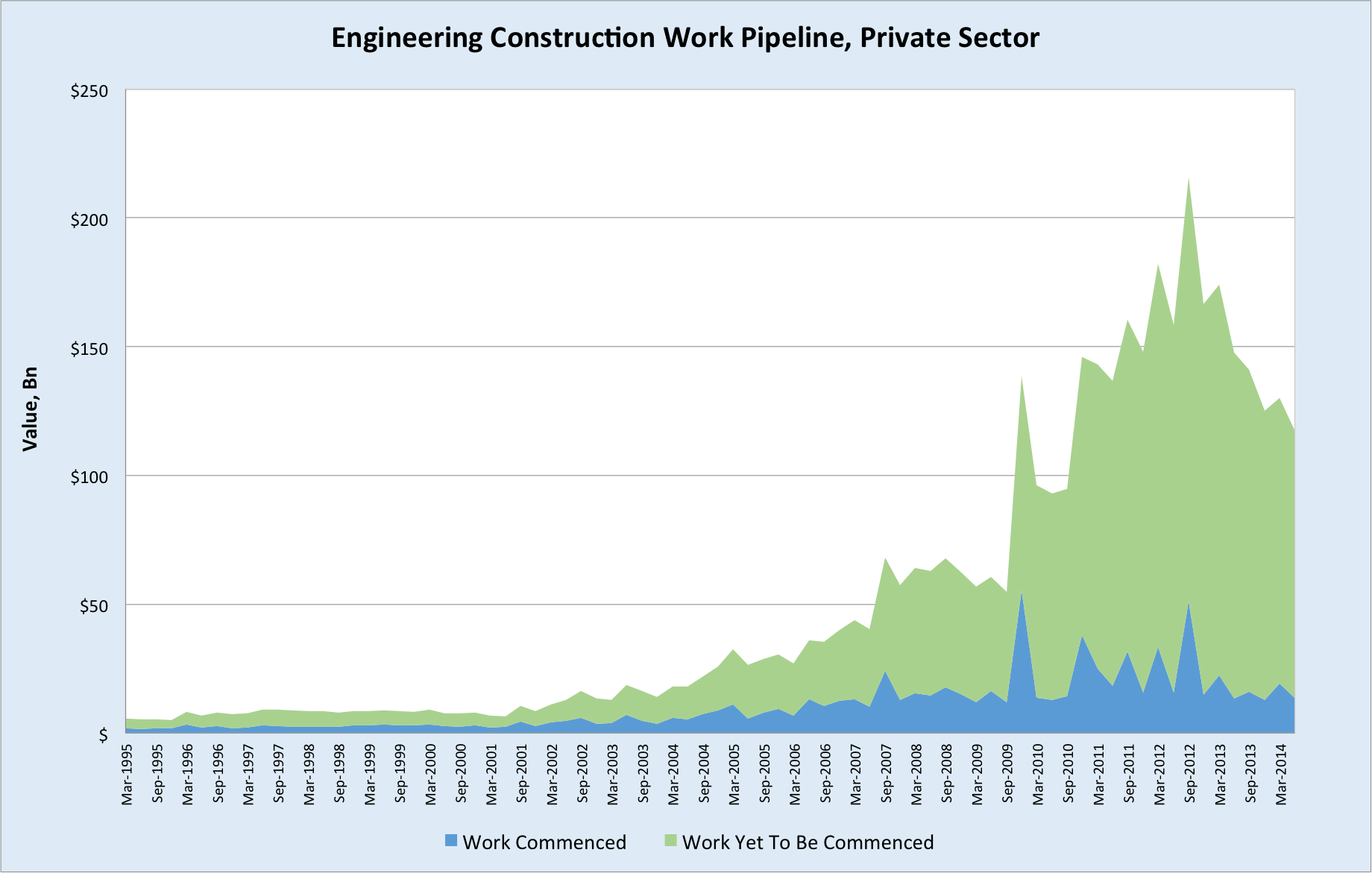
We know what the situation looks like for iron ore and mining investment.

Untitled2

EngineeringWorkPipeline

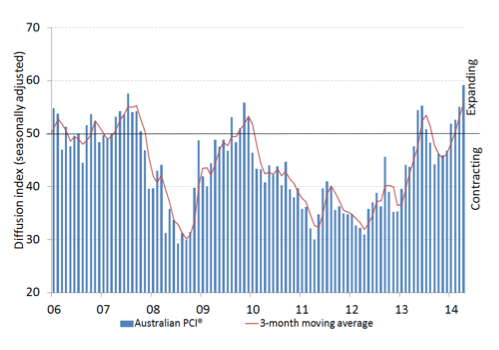
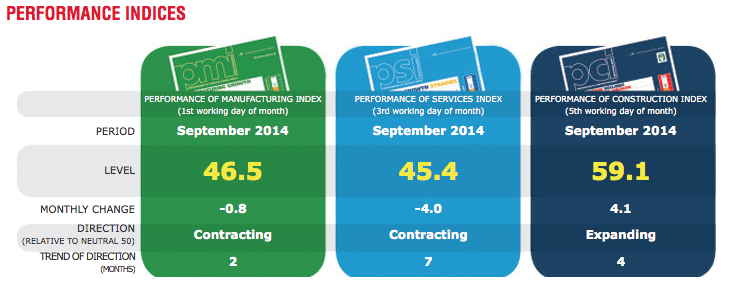
Turning to the bullish influences, activity centred on the property sector is clearly very strong at the moment, as we can see this in the latest reading on construction activity from the Australian Industry Group.

Screen Shot 2014-10-07 at 12.17.19 pm

Unlike the manufacturing and services sectors, construction is charging (above 50 indicates expansion):

Screen Shot 2014-10-07 at 12.13.24 pm

It is good to see a supply-side response in the property sector, since structural supply constraints have hampered the market for years. But it must be remembered that this cannot sustain the economy indefinitely. Once a house or apartment is built the positive impact on the economy has mostly passed. Of course, it provides a place to live, but living in an apartment doesn’t support jobs; building it does. Therefore other sectors, especially the non-mining tradable sectors, need to be revitalised to fill the void left by the declining terms of trade and support jobs in a sustainable manner. To achieve this means substantially lowering the real exchange rate. Raising interest rates now would severely diminish the prospects for a continuation in the currency’s fall, and make the goal of a lower real exchange rate all the more challenging.

It would be nice to suppose some excitement will be injected in monetary policy after soporific missives from the RBA, but I suspect they will be content to stand pat for the rest of the year for some time yet.

Straya T’day 1/10/2014

National Day brings peace and quiet…

…unless you happen to be occupying Central, in which case you’re embroiled in the thick chaos of rebellion.

BytjLmoCcAEIwpV.jpg-large

For Aussies at least, China’s National Day holiday week offers a welcome respite from the daily torment inflicted on us by the Chinese commodities exchanges.

So no iron ore or steel news today; for once this Straya T’day post will be all-Strayan.

Retail sales miss

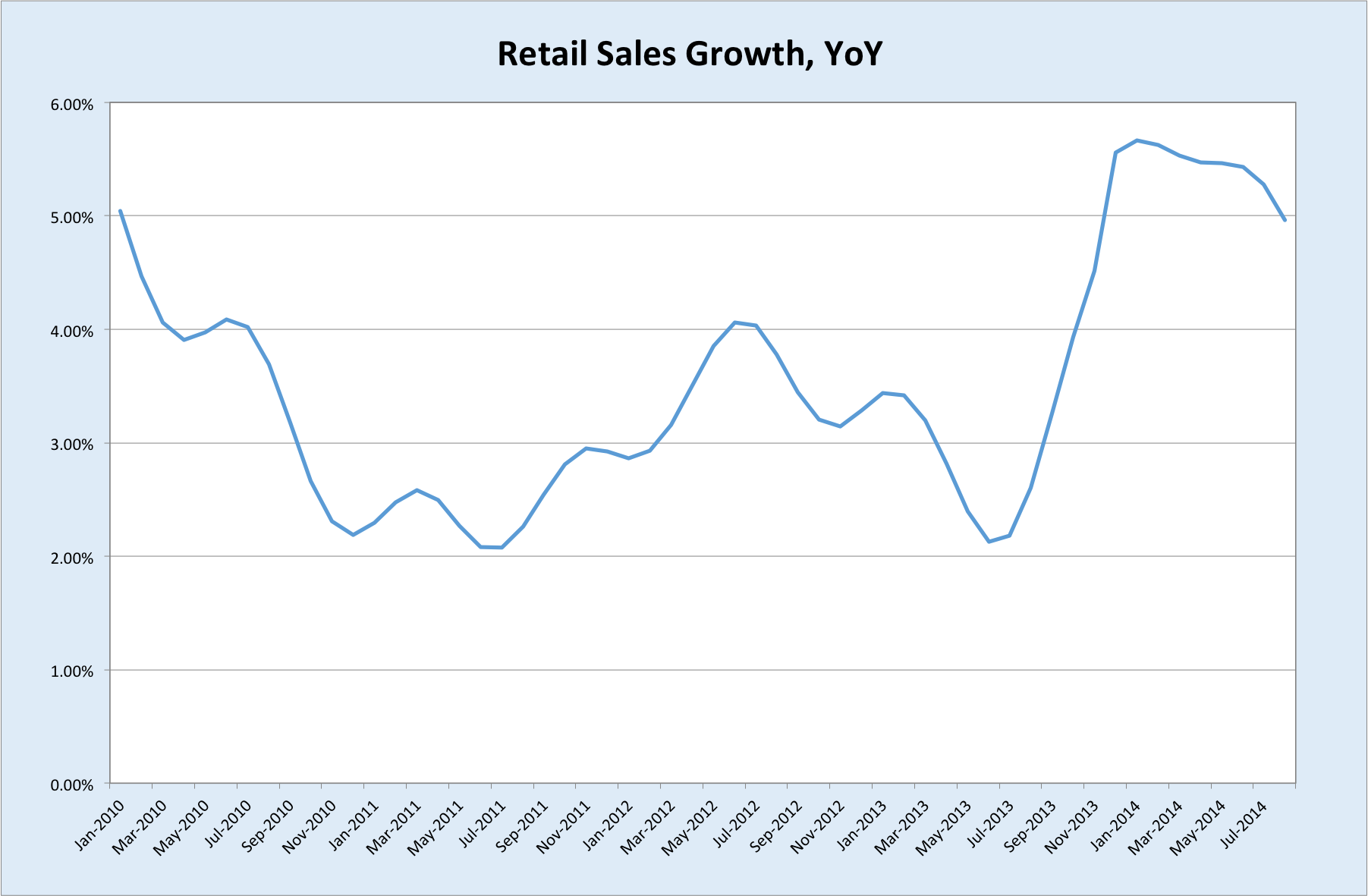
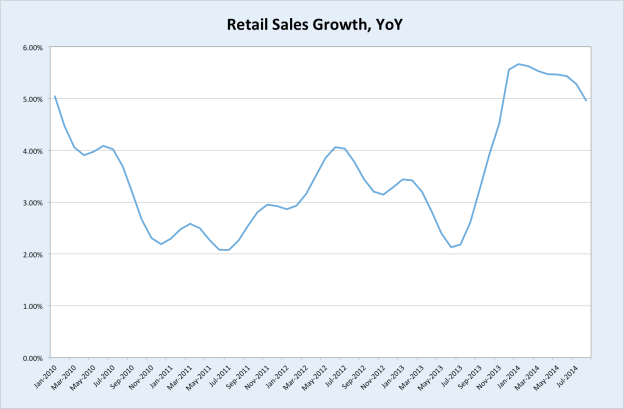
Retail sales for August came in lower than expected, printing a 0.1% seasonally-adjusted gain over July, on expectations of +0.4%. Retail turnover was 5.1% higher than August last year. The respective trend figures were +0.2% and +5%.

The yearly gain in sales still looks fairly healthy. (Both charts use trend data.)
RetailSalesAug14yoy

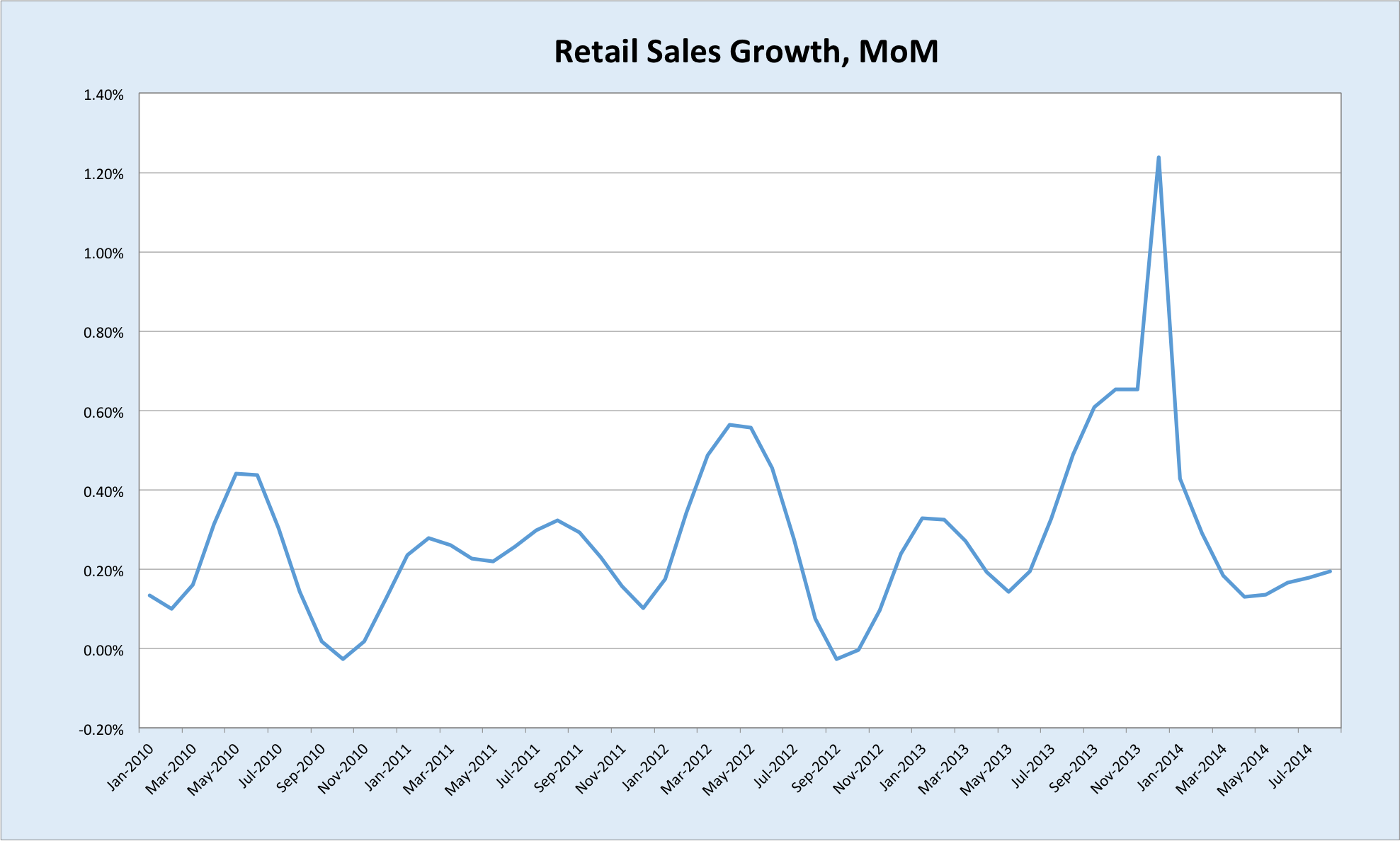
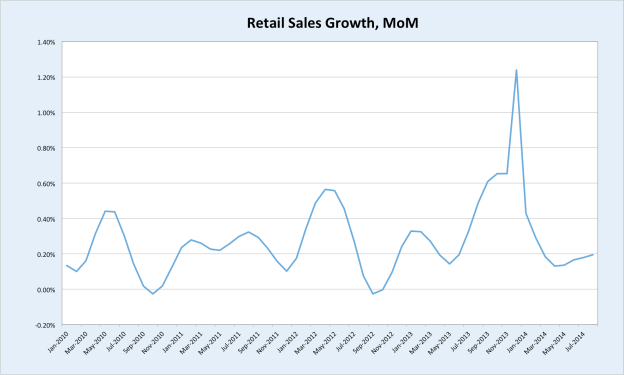
However much of this strength reflects the surge in the latter half of last year, which is still ‘passing through the snake’.

Monthly figures have been subdued for most of this year.
RetailSalesAug14mom

The budget didn’t do much for consumer sentiment, and this has no doubt been a key factor in households’ reluctance to loosen the purse strings. It may also be a function of the deteriorating outlook for iron ore, which has been reported more widely and with an increasing acceptance that the situation is not likely to improve materially in the foreseeable future, other than perhaps a tepid restock in Q4.

Manufacturing PMI surprises

In fairness, Australia’s manufacturing PMI surprises me with every release, since its very existence implies that manufacturing has survived another month.

It’s pretty bleak reading, although that’s nothing out of the ordinary. Until Australia’s real exchange rate significantly devalues, there’s little hope of a broad-based revival in business expenditure in the manufacturing sector.

Mining capex unwind is upon us

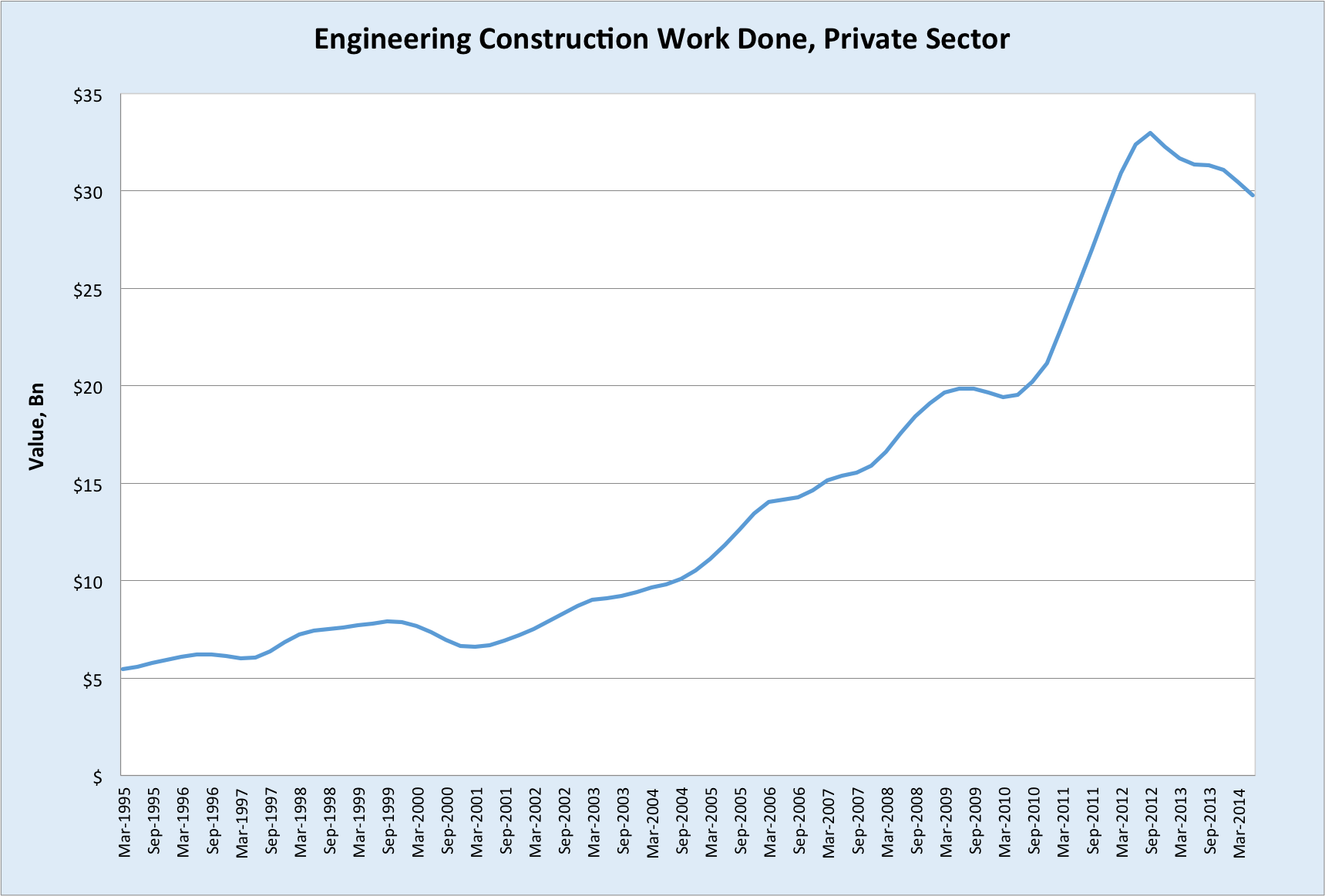
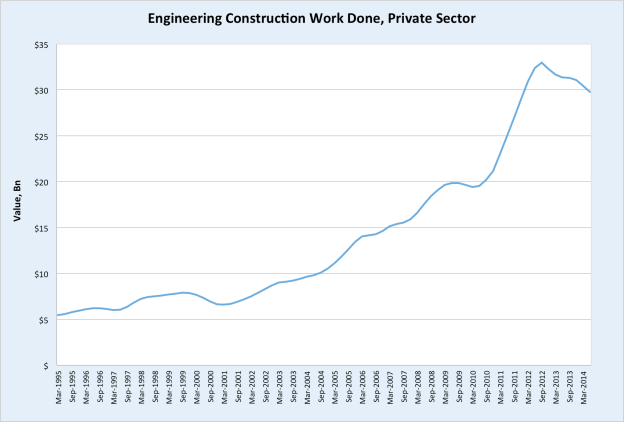
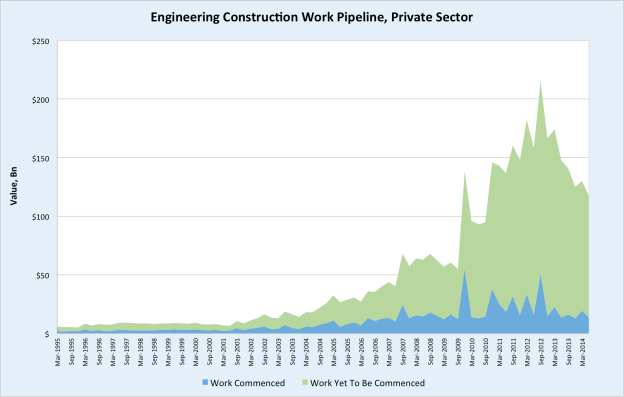
Along with retail sales, the ABS released quarterly data today on engineering construction work, which is an important measure of mining investment activity. Combined with the flagging terms of trade, the downturn in mining investment is the chief headwind facing the Australian economy over the next couple of years.

Overall, the value of work completed declined 2.2% in the June quarter from March. The value of work completed by the private sector declined 1.9% to $23,130m.
EngineeringWorkDone

So far the descent has been fairly smooth, however this is set to steepen rapidly over the next 6 to 12 months.
EngineeringWorkPipeline

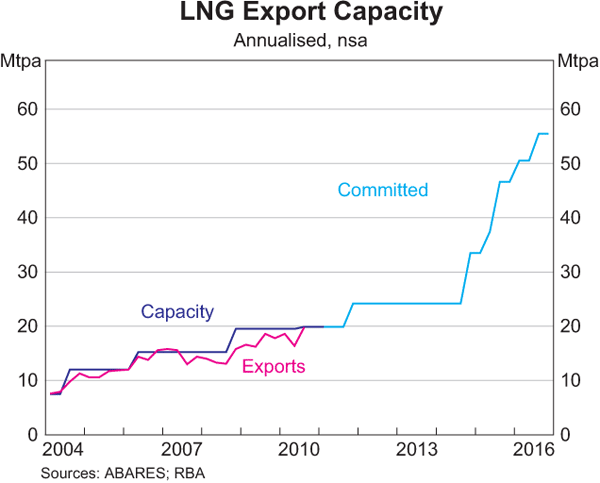
Of course, all this investment is going towards substantial increases in Australia’s export capacity, primarily in LNG. So will the decline in investment give way to a boom in exports, such that the net impact on the economy is benign?

Not quite.

It’s important to remember that Australia’s mining boom over the last decade has been enriching beyond precedent because it was a boom in profits. So despite the vast majority of Australia’s mineral resources being owned by foreign interests, the profits generated by these firms greatly increased company tax receipts and royalties revenue, much of which was then passed on to households in the form of tax cuts and transfers. Booming profits also saw wages in these industries skyrocket, providing another conduit for the windfall to flow into the Australian economy.

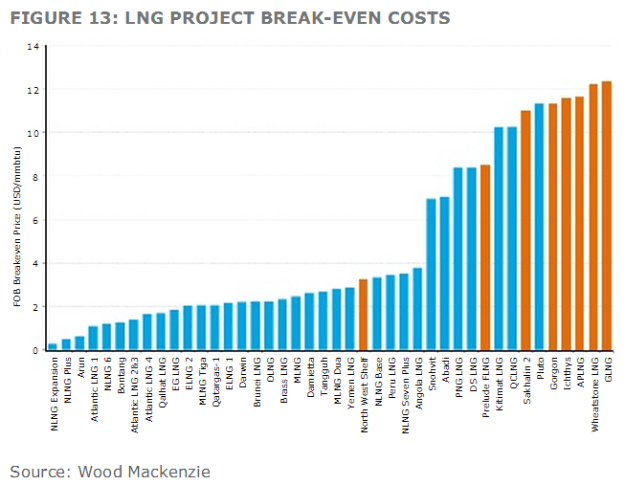
The ‘boom’ in LNG exports after the investment phase passes and supply ramps up will be quite different. These mega-projects in Queensland, WA and the NT are going to be about the most expensive sources of LNG on the planet, placing them at the other end of the ‘cost curve’ to Australia’s iron ore majors (see below). This means that current LNG prices aren’t going to deliver the massive profit margins that characterised the mining boom. So although Australia’s export volumes will surge, supporting GDP growth by improving the trade balance, the income effect on Australia will be negligible when compared to the iron ore and coal booms of the last decade.

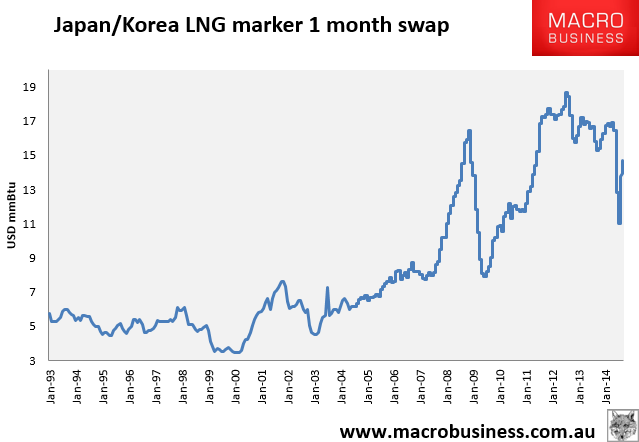
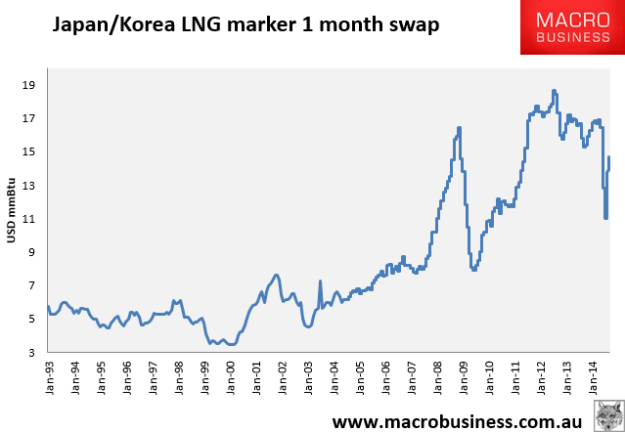
The gas has mostly been sold on long-term contracts. However, what happens to spot prices once the gas starts flowing remains to be seen. There was already a mini-crash in spot prices this year during the northern summer…
LNG crash

…and yet the ramp-up in Australia’s LNG exports has barely begun.
LNG exports

If spot prices do fall significantly below contract prices, there will be immense pressure on suppliers to renegotiate those agreements.

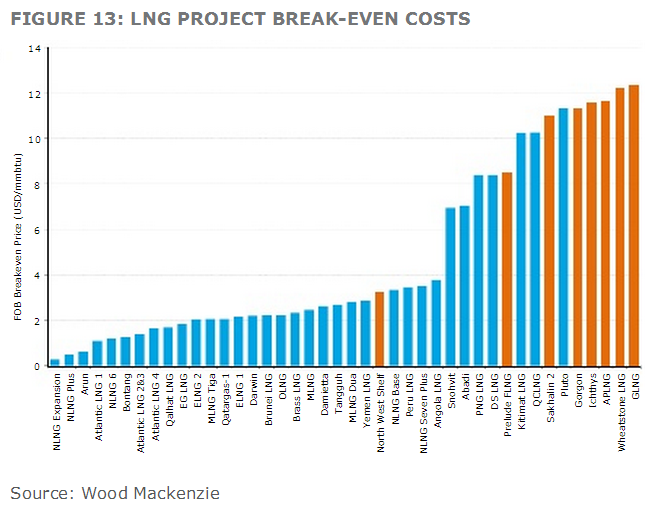
Here’s where Australia’s LNG projects sit on the cost curve (in orange).
LNG BE

Clearly, if spot prices drop much below the levels they did during the northern summer, and stay there for any length of time, a lot of these projects are going to face serious trouble as buyers attempt to wriggle free of contractual obligations.

Yet another reason why we’re fervently cheering the Australian dollar lower!