Tag Archives: Australia

RBA gets onboard the macpru train

The RBA released its biannual Financial Stability Review yesterday, offering the usual trove of insight to anyone interested in such troves.

One big takeaway is that the central bank is now unambiguously acknowledging the dangers emanating from the housing market (which I’ve covered in the series on interest rates):

The low interest rate environment and, more recently, strong price competition among lenders have translated into a strong pick-up in growth in lending for investor housing – noticeably more so than for owner-occupier housing or businesses. Recent housing price growth seems to have encouraged further investor activity. As a result, the composition of housing and mortgage markets is becoming unbalanced, with new lending to investors being out of proportion to rental housing’s share of the housing stock.

If we jump to the Australian Financial System section, the RBA had the following to say:

Australian banks are benefiting from improved wholesale funding conditions globally and, in turn, an easing in overall deposit market competition. Lower funding costs are facilitating strong price competition in housing and commercial property lending. Fast growth in property prices and investor activity has increased property-related risks to the macroeconomy. It is important for macroeconomic and financial stability that banks set their risk appetite and lending standards at least in line with current best practice, and take into account system-wide risks in property markets in their lending decisions. Over the past year APRA has increased the intensity of its supervision around housing market risks facing banks, and is currently consulting on new guidance for sound risk management practices in housing lending.

And again in the section on Household and Business Finances:

The pick-up in household risk appetite that was evident six months ago appears to have continued, as has the associated willingness to take on some types of debt. Housing prices have been rising strongly in the larger cities. To some extent, these outcomes are to be expected given the low interest rate environment and the search for yield behaviour of investors more generally, both here and overseas. However, the composition of housing and mortgage markets is becoming unbalanced.

Nervous about housing and laying much of the blame at its own feet (low interest rates). As I’ve said a number times, the robust housing sector is the one area of the economy that argues for higher rates, whereas slumping commodity prices, the wind-down in mining investment and weak domestic demand generally all argue for lower.

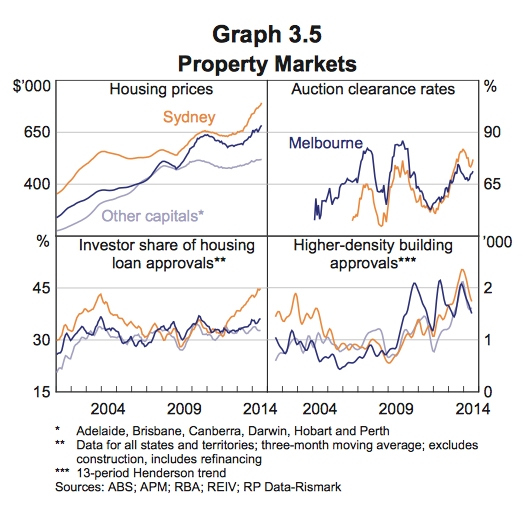
A look through the Review’s charts helps elucidate the situation in housing.
Screen Shot 2014-09-25 at 1.57.50 pm

Screen Shot 2014-09-25 at 1.58.13 pm

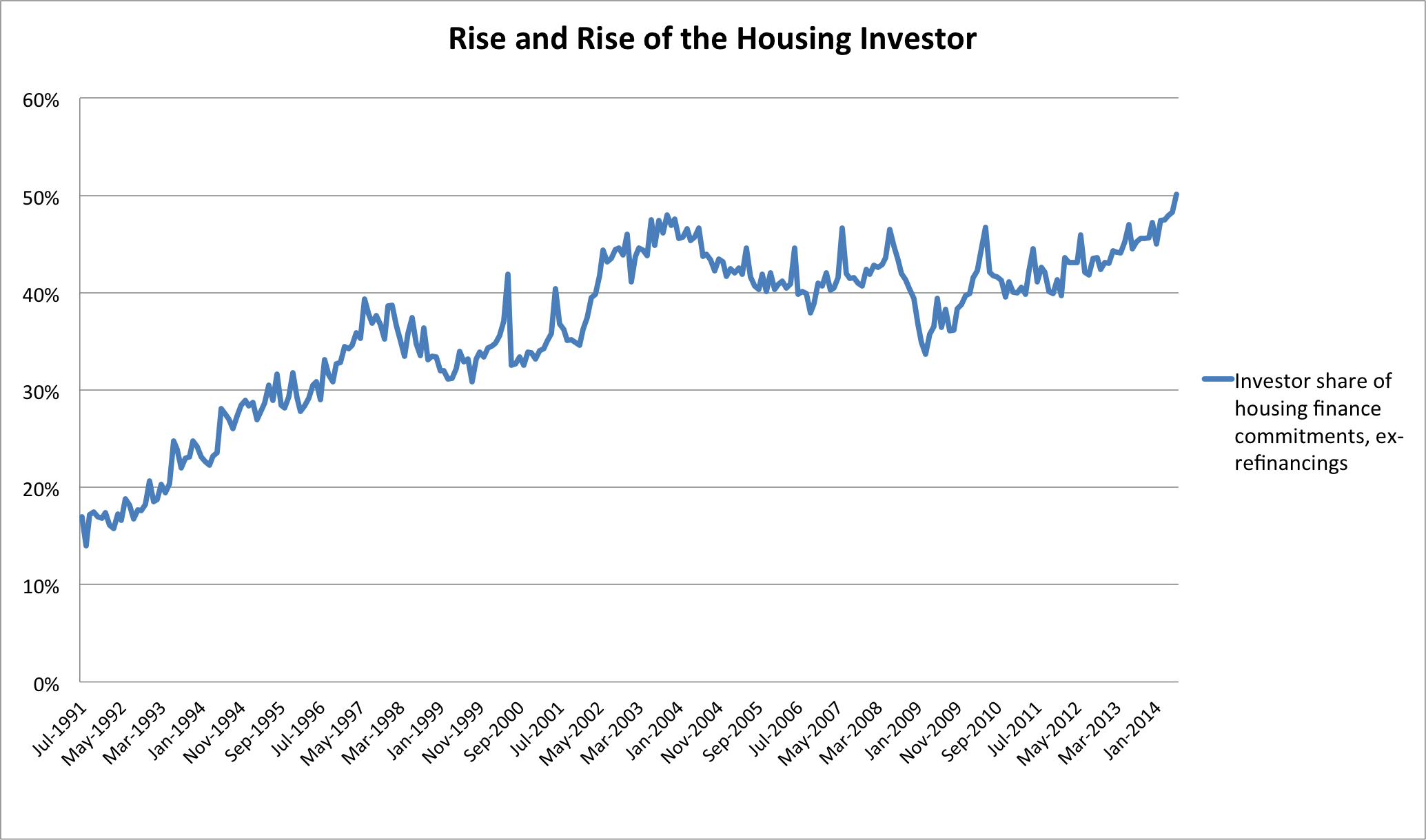
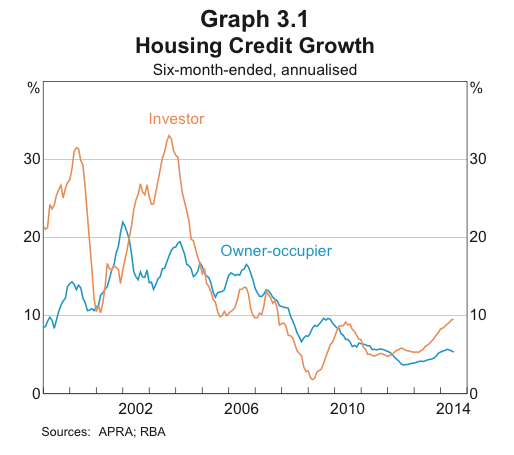
I have previously discussed the property investment frenzy which took hold in the early years of the millennium, and this is clearly visible in the above charts (note the investor share of housing loan approvals includes refinancing in that chart, my own chart did not). Indeed, by the standards of 2003-04, the current run-up in investor borrowings looks paltry. However, it must be remembered that we began from a much higher base in 2013. Moreover, the national figures mask the fact that the current boom has been centred on Melbourne and Sydney, with the latter easily accounting for the most fevered activity. This we can observe in both the pace of house price appreciation in Sydney (above) and the parabolic explosion in investor loan approvals (below).
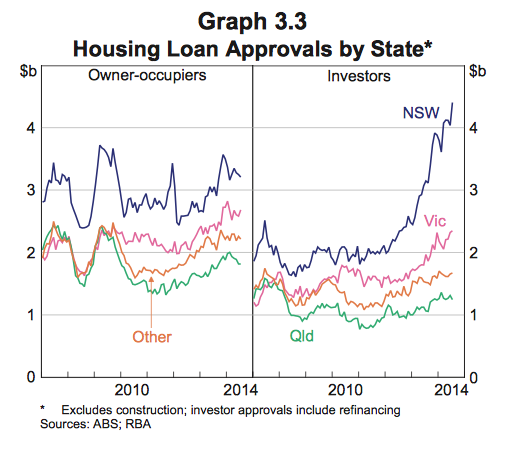
Screen Shot 2014-09-25 at 1.58.06 pm

The RBA believes the primary threat this poses is to real macroeconomic conditions, rather than to the stability of the financial system (which would exacerbate the damage the macroeconomy, of course). For now, I think this is a fair assessment, since we haven’t seen the kind of deterioration in lending standards that usually characterises bubbles that go on to destabilise financial systems (though this is heavily dependent on how serious the terms of trade downturn gets). The adverse impact of falling prices on lenders occurs when loans repayments become impaired; house prices can fall without borrowers necessarily defaulting, provided they have sufficient net worth to weather the capital loss on property assets. Low net worth buyers are simply being priced out of the market, so the argument goes, and therefore we don’t need to worry about surging non-performing loans in the event of a property downturn.

Nevertheless, Australian households remain highly indebted, and the debt-to-income ratio is exposed to a shock to incomes arising from the falling terms of trade and resource-sector investment. So even if the banking system doesn’t suffer systemic instability, there is still scope for the housing market to hit consumer spending.
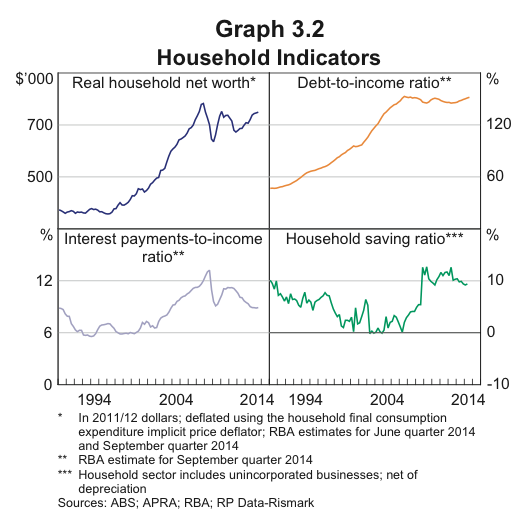
Screen Shot 2014-09-25 at 1.57.58 pm

To my mind, the issue is that housing risks inflicting a wealth shock on Australian households at the same time that they experience an income shock due to the unwinding of the twin booms in the terms of trade and resource-sector investment. Households exhibit measurable propensities spend out of their current income, which is hardly surprising, but spending patterns also react to changes in wealth. By allowing house prices to appreciate as they have, policymakers added another unwanted risk to the economy as it enters the post-boom adjustment.

What to do?

If the housing boom was primarily a response to low interest rates, and if little else in the economy argues for higher rates aside from booming housing, then the RBA is plainly in a bind. The economy would be suffering grievously today if the RBA hadn’t reduced the cash rate over the period it did (late 2011 to late 2013), but it now has a disconcerting housing boom on its hands as a result.

As it turns out, this is a widespread dilemma which many developed economies have had to contend with in recent years. Largely due to structural changes in the global economy, over the past decade and a half, many developed economies have faced low inflation and weakening labour markets (especially amongst low-skilled workers). The popular prescription to this problem was to lower interest rates. As it turned out, lower interest rates exhibited a tendency to drive credit growth and asset prices higher, to a much greater extent than goods and services inflation. This was a challenge to orthodox thinking on economic policy.

A suite of policy tools have therefore been gaining popularity since the GFC as a way of addressing this conundrum. Known as macroprudential regulations, these tools are aimed at curtailing the speculative excesses that tend to appear when interest rates are low, thus avoiding the need to hike interest rates in environments that would otherwise not warrant them. The Economist has a useful primer on macroprudential policies.

The RBNZ introduced macpru policies last year, chiefly restrictions on high loan-to-valuation residential mortgages, and this seems to be having the desired effect. After vocal calls for the RBA to adopt (through APRA) a similar approach in tandem with its cuts to interest rates, we are finally seeing some receptiveness on the Bank’s part. I have highlighted the relevant comment from the Review, which strongly suggests regulators are preparing to introduce these policies.

Then, early this afternoon, we received virtual confirmation that the RBA will push ahead with macpru controls to address the investor segment of the property market. This is a most welcome development and sensible policy. Stevens is correct that there is little downside to experimenting with these policy options, which was always one of the foremost points of recommendation.

The AUDUSD was hammered on Stevens’ remarks; the FX market knows as well as I do that the investor property boom is the chief factor holding up interest rates!
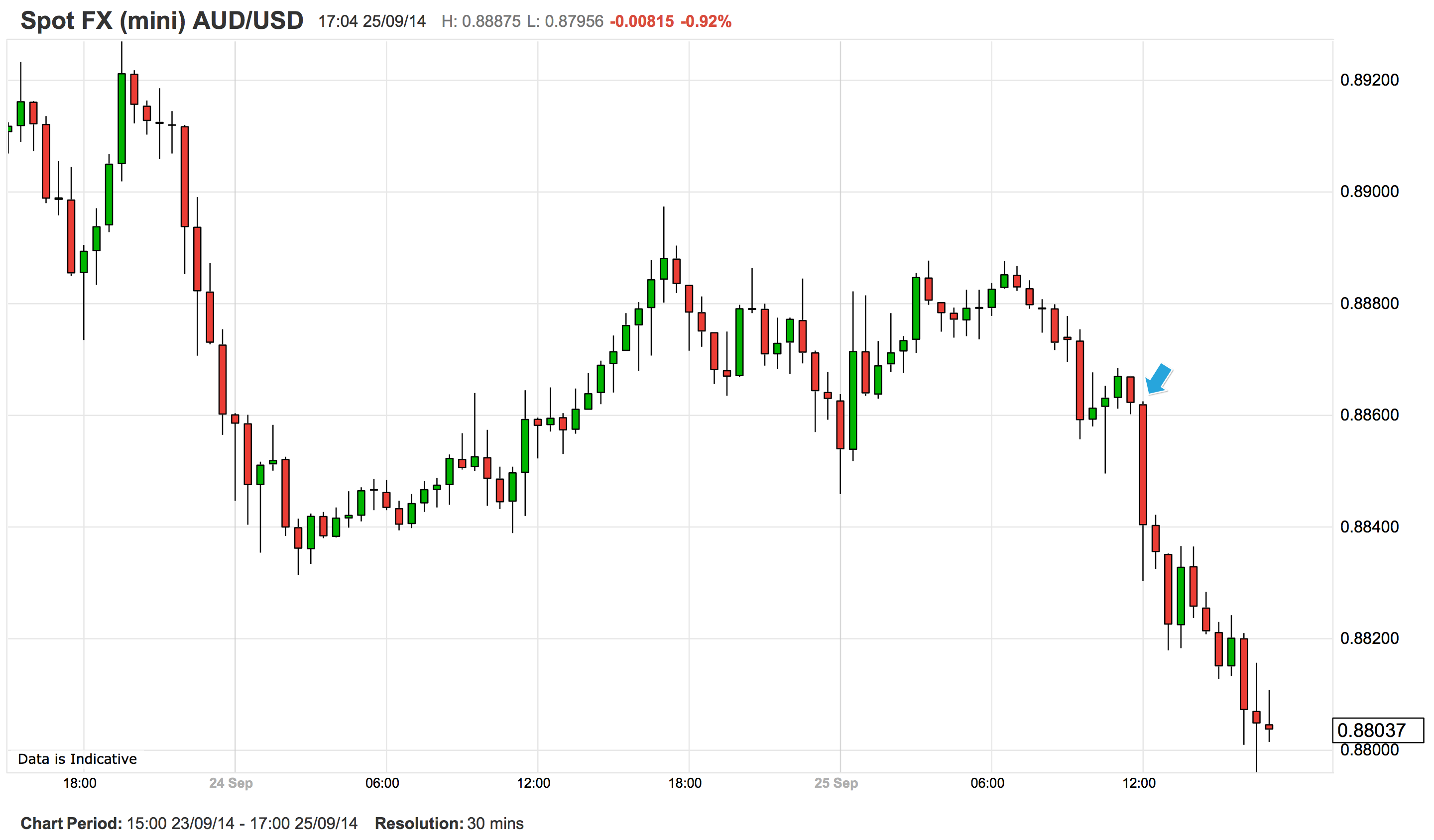
AUDTSvenes

Straya T’day 22/9/2014 (updated-2)

Steel and iron ore limit down!

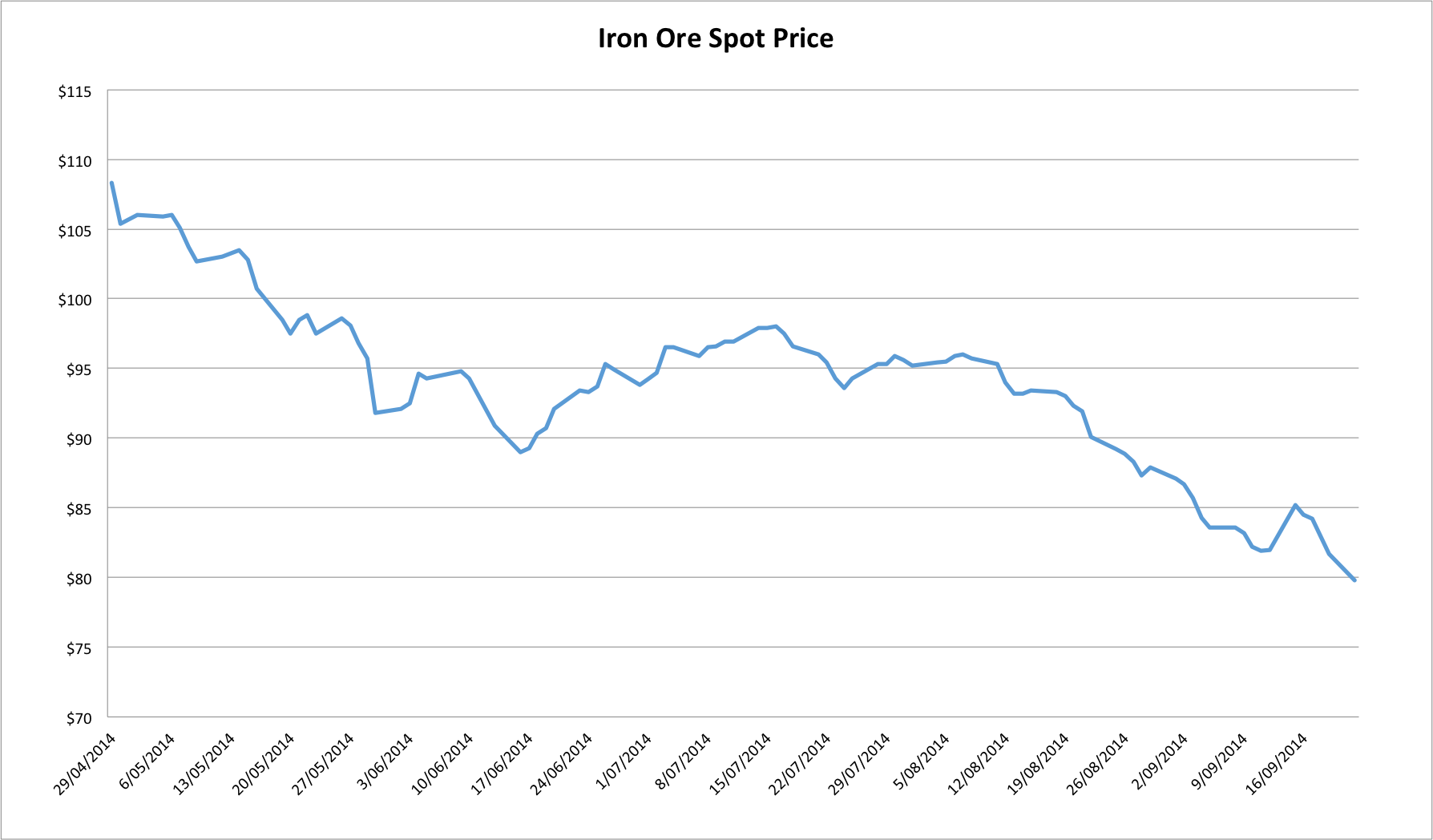
Not much to add really, the title speaks for itself (limit down is -4% for rebar and Dalian iron ore). Singapore contracts are also trading under $80. This is getting very ugly for Australia now. I scarcely want to imagine where spot will finish up tonight, but unless there’s a big recovery in paper markets this afternoon, it’ll be below $80.

The Federal budget in May forecast iron ore at $100, a price many commentators thought was overly pessimistic (thus allowing the crafty Treasurer to claim a ‘surprise’ revenue beat). Well, triple figures looks like a dream from where we are today. And let us not forget the three ring circus that is the WA budget, which forecast iron ore at $122 across FY2015. There will have to be a substantial redistribution of GST revenues given the ruinous WA budget, which will further weigh on the Federal budget.

I said it at the time, the Coalition chose a fiendishly bad moment in Australia’s history to assume the reins in Canberra, considerably worst than Labor in 2007.

It’s a shame our house prices are so high relative to incomes, as they add yet another layer of risk to the unfolding Australia bust.

Update 1

Unfortunately there was no recovery in paper markets this afternoon.

Here’s the daily Reuters piece. It’s a bloodbath, basically.

Update 2

Spot down to $79.80, now off 40.5% this year in USD terms. More from FT.

spot IO

Only sliver of good news is that AUDUSD is still getting pumped, meaning spot is now down 40% in AUD-terms, after exceeding USD-denominated losses for most of the year. Thank the almighty Fed for the USD rally, Nev.

AUD22:9

Strayan Rates – Part 5: The End of the Beginning

One of the first points I highlighted at the beginning of this series on Australian interest rates was the overwhelming consensus among local prognosticators that the next move in the cash rate would be up. Since I did not share this view, I wanted to lay out the rationale for my unusually downcast outlook, and perhaps identify any weaknesses in my reading of the Australian economy that might have led me to this contrarian conclusion.

First of all, a quick refresher on where we’re at.

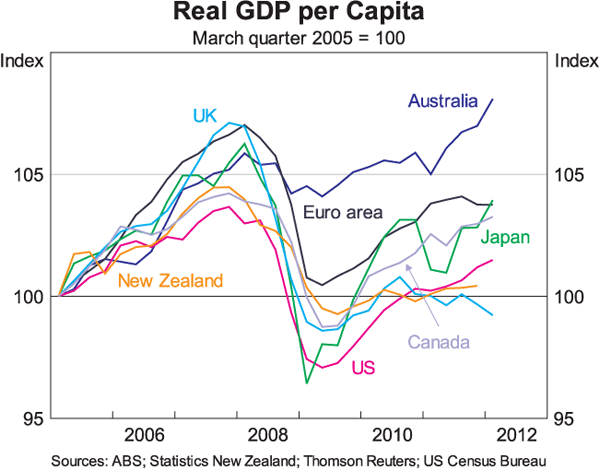
China is leagues ahead of any other country in terms of its contribution to Australia’s export earnings. Our gargantuan northern neighbour’s demand for iron ore and coal has driven our terms of trade to never-before-seen heights, and this has been the key to Australia’s (rich-) world-beating economic performance over the past decade. (See here for more on China’s role in Australia’s foreign trade.)

Real GDP per capita

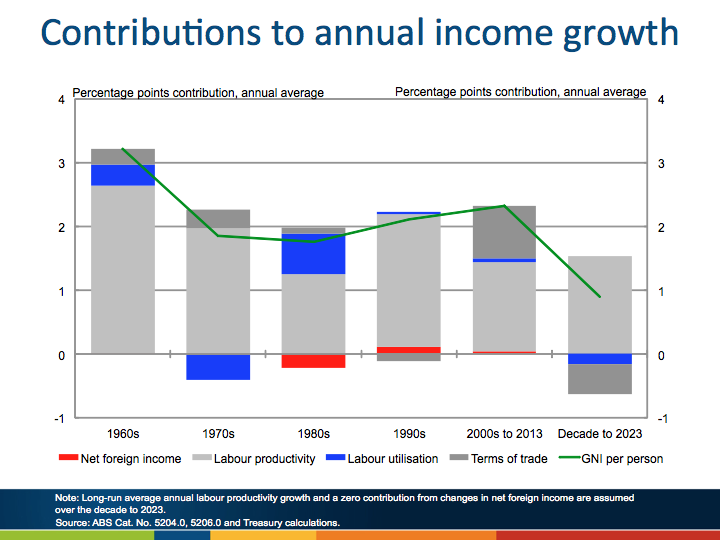
When we decompose the contributions to Australia’s income growth, we can clearly see what has driven this outperformance. (Chart from the Australian Treasury.)

Screen Shot 2014-09-21 at 2.58.20 pm

Without the extraordinary terms of trade boom that accompanied China’s emergence in the global economy, Australia’s income growth would have been markedly lower in the new millennium. (Well, not necessarily; some would argue that the boom sowed complacency in the political class and stymied reform efforts. Nevertheless, given the changes being wrought on the global economy, it’s extremely unlikely that Australia could have grown its per capita income at anything like the rate it did thanks to the terms of trade boom.)

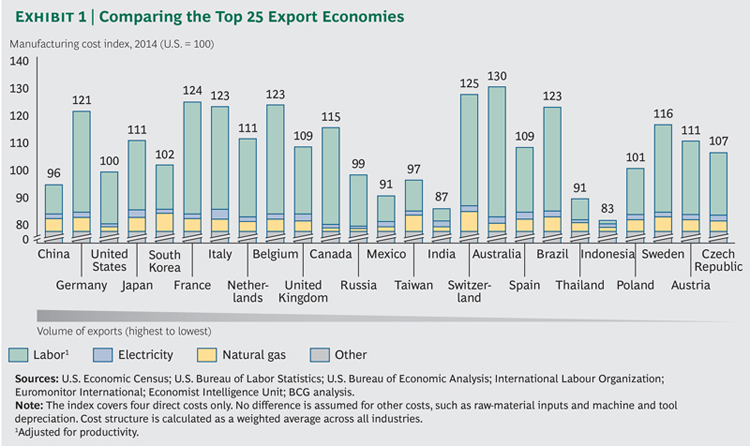
By allowing the windfall from higher export earnings to filter out into the economy in the form of higher incomes, Australia wilfully recast itself as one of the highest-cost economies on Earth. This is a particularly acute issue for the manufacturing sector in Australia, which is facing a grim future, but it is also evident in other important export sectors, such as higher education.

Shifting-Economics-Glb-Mfg-ex1_large_tcm80-167416

Higher per capita incomes are of course the fundamental long-run goal of economic policymaking. They are the reward for producing high-value output. But it is important to recognise the nature of output. Terms of trade booms deliver rapid increases in the value of a country’s output, but are usually transient.

Australia achieved healthy growth in incomes during the 1990s largely as a result of gains in labour productivity which were themselves the result of reforms instituted during the 1980s and early 1990s. In the early years of the new millennium, Australia experienced a credit and housing boom, which provided the appearance of further improvements in living standards. This would have ground to halt after 2004, but for an incredibly fortuitous boom in the terms of trade. (A process I ran through in the last post.)

Since then, as the above chart from Treasury shows, Australia has been heavily reliant on the terms of trade windfall to drive rapid growth in incomes. While this has been a boon for the living standards of Australians, it also leaves them exposed to a downturn in the terms of trade; and unfortunately that is precisely what we are witnessing today. Iron ore was well and truly into its annus horribilis when I started this series, however shortly afterwards I pointed out that it appeared primed for a ‘Q3 capitulation’. This is just what we got, with iron ore falling another 8% since that post, and looking likely to break $80 this week.

So, with the terms of trade now a serious drag on national income, Australia will likely need to endure an extended period of flat or falling real incomes to regain its competitiveness and reinvigorate its non-mining trade-exposed sectors. In other words, it requires a lower real exchange rate.

Digression on real exchange rates

There are three components of the real exchange rate:

  • Australia’s productivity relative to the rest of the world
  • The nominal exchange rate, which is the price of the Australian dollar against other currencies
  • The price level in Australia relative to the rest of the world

If a country is lacking international competitiveness and needs to readjust it’s real exchange rate, arguably the least painful way of doing so is by raising productivity, such that the high cost structure of the economy can be justified by the value of goods and services being produced. There are a variety of policies which can facilitate higher productivity; in Australia they have often been lumped together under the term ‘microeconomic reform‘. Broadly speaking, these were the sorts of policies that drove Australia’s impressive productivity performance in the 1990s.

If a country is severely uncompetitive and heavily reliant on imports, then it may be unfeasible to raise productivity sufficiently in the short-term, and the exchange rate must depreciate. This is best achieved by a swift decline in the price of the local currency relative to international currencies, without a corresponding rise in the domestic price level. However, an interesting case has arisen lately in which a number of advanced economies no long possess the ability to devalue their currencies. These are the countries that have adopted the euro, and devaluation for them means something quite different.

Without a nominal exchange rate fluctuating against many of their major trading partners (other Eurozone countries), if countries using the euro find themselves in an uncompetitive position, they must turn to the final component of the real exchange rate; the domestic price level. This means that lower domestic prices are required to regain competitiveness, with the most important price being the price of labour (wages). Unfortunately wages are usually quite sticky, meaning they adjust downwards slowly and reluctantly, through high and protracted unemployment. The parlous state of the periphery economies of Europe in recent years reflects this slow, painful process of ‘internal devaluation’.

Back home: the dollar dilemma

The RBA has long grappled with the stubbornly high Aussie dollar (Australia’s nominal exchange rate). Indeed, one of the most familiar phrases to keen readers of RBA communiques is surely “the Australian dollar remains high by historical standards.” The reason much of the policymaking establishment in Australia has been eager to see the Aussie dollar fall alongside the terms of trade is so that we may avoid the fate of the European periphery, and readjust our cost structure without the painful experience of high and protracted unemployment.

The price of the Australian dollar against other major currencies (and minor ones of countries with whom we compete) is therefore an important determinant of the interest rate outlook. At the time I began writing this series, the AUDUSD was trading around .9300; at the close last week it sat at .8926. As I noted this week, the timing of the fall this past fortnight caught me a little by surprise. It came courtesy of a sharp rally in the USD, and although USD strength has been a central theme of my market view for around 18 months, exactly when it was going to break out I could not say.

The USD is now in the process of establishing a firm, if belated, uptrend. Only a sudden and unexpected deterioration in economic conditions in the US will derail it now, and this could have important ramifications for Australia. A sharp depreciation in the AUDUSD (sub .8000), would take a great deal of pressure off the RBA. It would support exports and jobs, and should revive investment in non-mining tradable sectors. It would also support state and federal budgets by raising company tax revenues. The real value of household income would be reduced by the higher cost of imports, and this would crimp consumption somewhat, however this is the entire purpose of a real exchange rate depreciation, and therefore unavoidable. Also, the loss of household purchasing power could well take the steam out of house prices, which would provide the RBA with more freedom to cut rates, since strong house prices have been a growing concern for policymakers. Overall though, a sharp depreciation in the Australian dollar would lessen the need for the RBA to cut interest rates.

Triumvirate in control of the cash rate

The overarching theme as I commenced this exercise was that the twin determinants of the next move in the cash rate were house prices (and by corollary, household spending habits) and the terms of trade. To be wrong in my view that the next cash rate move would be down, I argued the following scenario would need to transpire: the housing market leap out of the winter lull and record brisk spring price gains, and iron ore rebound smartly, albeit likely to lower levels than earlier this year (for this to happen I expected China would need to revert to loose monetary settings and another splurge in fixed asset investment).

This scenario seems to be growing less likely as the weeks wear on. As Stephen Koukoulas pointed out recently, the housing market is actually showing few signs of a continuation of the past couple of years’ gains. I certainly think it’s too early to say that the top is in, but with the market ever-more dependent on speculative demand for investment properties, and national income growth being eroded, the the bullish case for house prices is increasingly tenuous. The news has of course been considerably worse for the terms of trade; the iron ore bounce I heralded early last week turned out to be a rigid moggie. Now that we’ve printed a new low I won’t even venture a guess at where this ends in the short-term. A Q4 rebound will almost certainly happen, but that doesn’t mean much if it only rebounds to say, $90. If that’s all we get out of the Q4 restock, severe pain looms in 2015. As always, we watch China closely for signs of meaningful monetary and fixed asset investment stimulus. But the signs of stimulus on  the magnitude we’d need remain elusive.

Thus, on those two counts, the evidence is accumulating in favour of a rate cut. But given the developments in currency markets over the last fortnight, to these I think we can add a third determinant: the AUDUSD. Should the AUDUSD fall hard and fast enough, it may relieve the RBA of the need cut interest rates again. But it will need to be a big drop, and it will need to occur without corresponding increases in nominal wages (the take-home pay of workers) as the CPI jumps temporarily.*

So I am going to stick to my rate cut call, with an eye to late Q1 2015 or early Q2, on the assumption that iron ore receives some relief into the end of this year, house price growth is subdued and the Australian dollar does not rapidly devalue below .8000.


*This must be monitored closely as it could present an ugly situation for the RBA: It would negate the improvements in Australia’s competitiveness from a lower AUDUSD, since in real terms the exchange rate won’t have fallen by as much as in nominal terms, and so jobs growth and investment spending won’t recover as strongly. This would argue for lower rates. But if wages start to jump in response to high consumer prices, then the RBA would arguably be compelled to hike. Still, for now I believe this ‘stagflation’ scenario to be a remote possibility.

Straya T’day 18/9/2014

Aussie wilts along with the rest

A fortnight ago, I wrote:

As long as it’s relatively lucrative to borrow offshore and hold short-term AUD-denomiated assets, we aren’t likely to see a sustained fall in our currency.

This was quite unfortunate timing for me, given that I have been among the biggest AUD bears going around for the past 3 years. I hadn’t abandoned this conviction at the time of that post, but rather I was anticipating the Fed remaining relatively dovish; enough so that it wouldn’t send the AUD sharply lower until the RBA finally signalled the return of an easing bias. Whatever it was that fixed the market’s attention on the USD (those working papers from the Fed undoubtedly played a part), the timing of the AUD fall was plainly brought dramatically forward as the USD regained it’s mojo over the last fortnight.

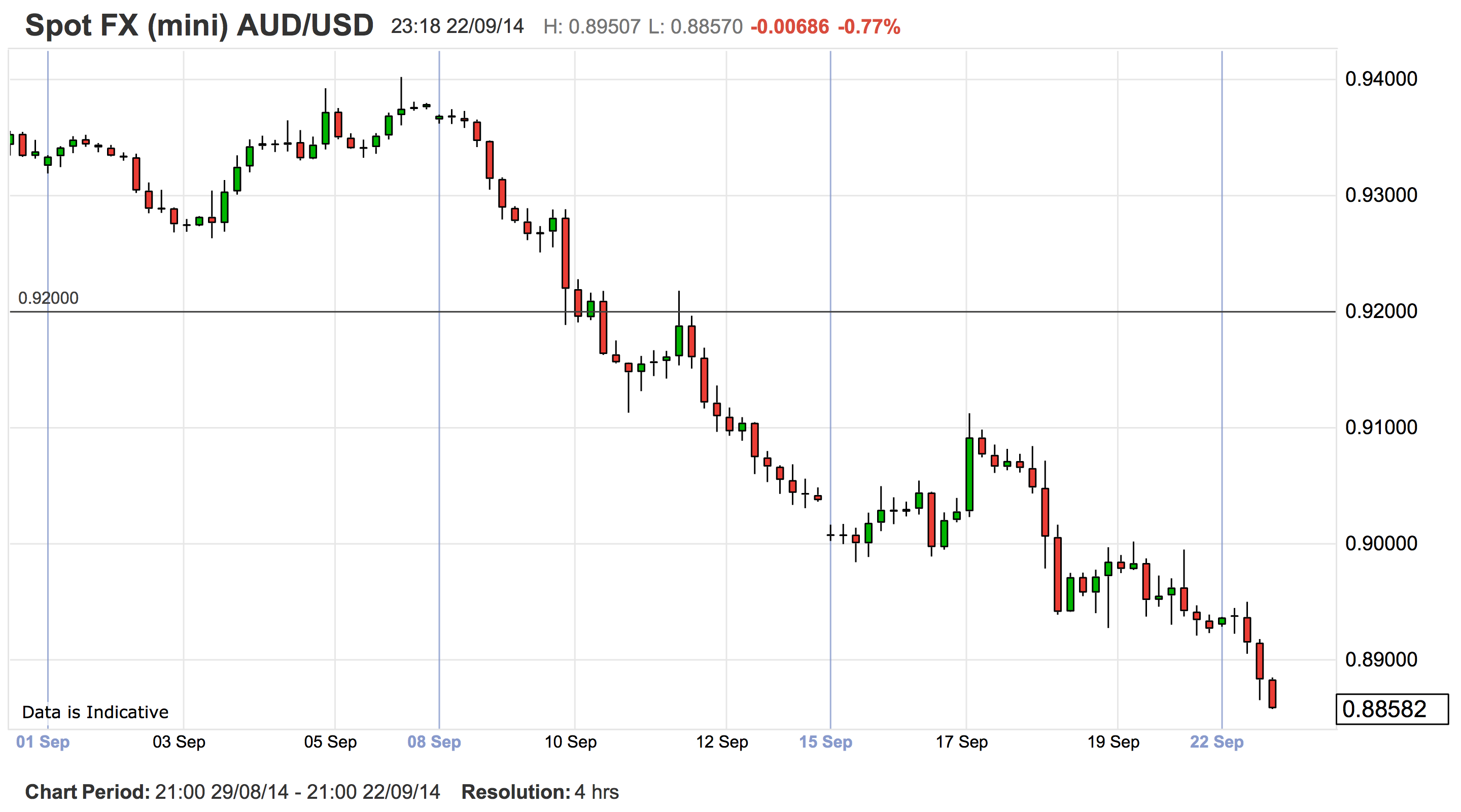
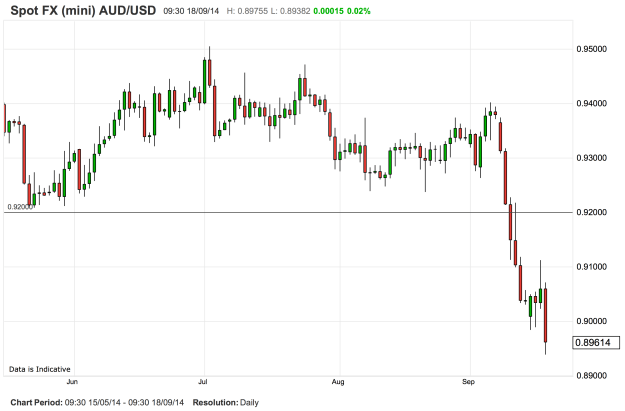
I discussed the capitulation of the AUDUSD last week. Here’s how it looks today.

AUD18
Chart from IG Markets

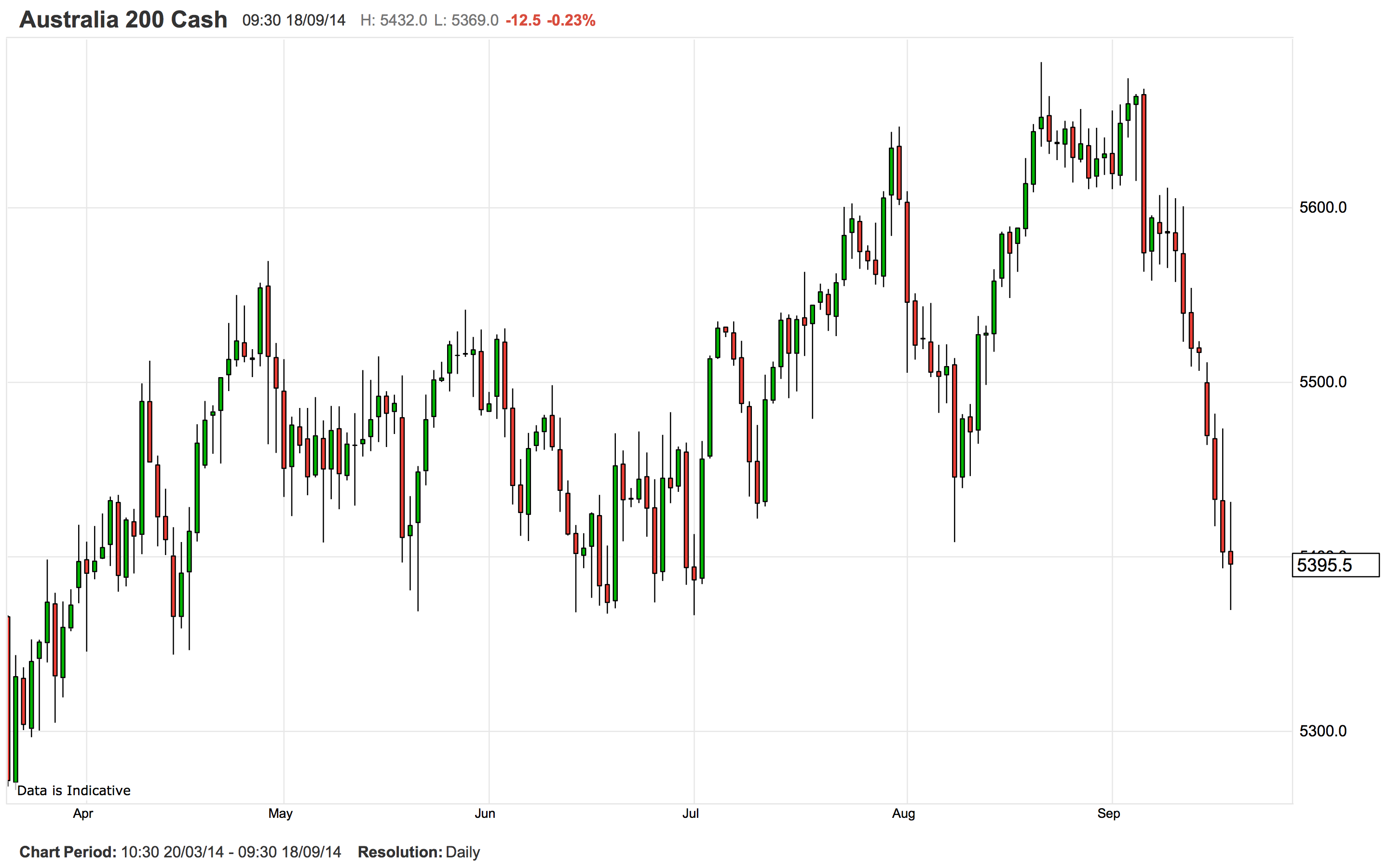
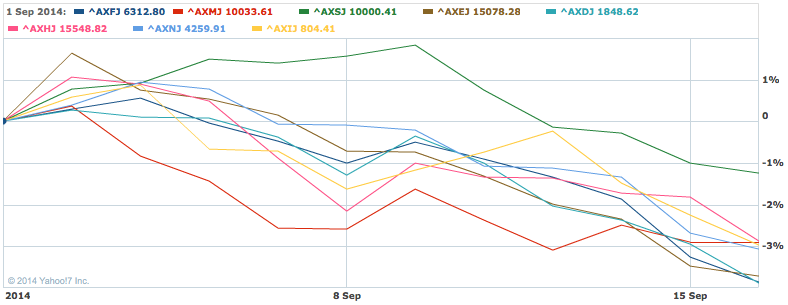
The mood in Australia is turning noticeably negative now. The local bourse has copped a hiding  this month, down around 4% despite resilience in US equities.

ASX

The selling has been broad-based across sectors, however financials (XFJ), consumer discretionary (XDJ) and energy (XEJ) have led the charge, with materials (XMJ) continuing to languish due to the rout in iron ore. It’s worth remembering that financials and materials together account for half the local share market.

Screen Shot 2014-09-18 at 2.13.32 pm
Chart courtesy of Yahoo Finance

Weighing on sentiment towards Australia has been a poor run of data from China, beginning on the weekend. There have been short-lived bursts of excitement about government stimulus measures, but anyone hoping for a concentrated campaign to rescues fixed asset investment (and in so doing, rescue Australia), looks destined for disappointment. Rebar futures are again on the nose today.

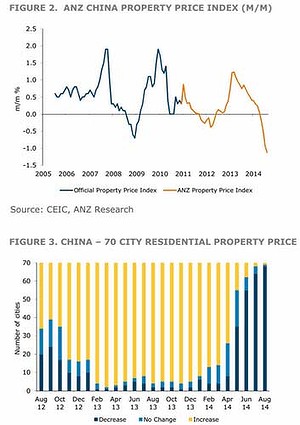
Data on Chinese property were released today, and the downturn is carrying on with scant regard for the apparent imminency of stimulus.

1_china-300x0

It’s getting quite nasty now, and I expect property will begin testing the government’s reform fortitude in earnest in the coming months. As the Premier recently noted, it’s employment growth that is chief first among the government’s policy objectives. As long as employment is holding up, the government will tolerate deflating property. But what happens if employment starts to seriously suffer as a result of weakening property?

Australian asset allocation

As I said, despite an unfortunately-timed assertion that the AUD would be unlikely to decline materially (that is, break support at .9200), I have been and remain a long-term AUD bear. As such, I continue to favour stocks with a sizeable portion of earnings being generated offshore, or those with solid growth prospects for offshore earnings. This excludes the miners, however, since my bearish medium term view of their main product is central to my expectations for a lower AUD.

Candidates include Seek.com (SEK), CSL (CSL), Cochlear (COH), Westfield (WDC), Computershare (CPU), ResMed (RMD).

I’ve also liked Billabong (BBG) and Elders (ELD) and speculative plays for a while. Both have been crucified and are in the throes of restructuring. ELD is moving back towards a pure-play agribusiness model after various diversification disasters over the years. I believe there is long-term value in the strategy; if it can pull off the turnaround in its corporate model it will be well poised to take advantage of a lower dollar boosting Australia’s agricultural export sectors.

All advice is general in nature and does not take into account an individual’s circumstances. Proceed with caution.